
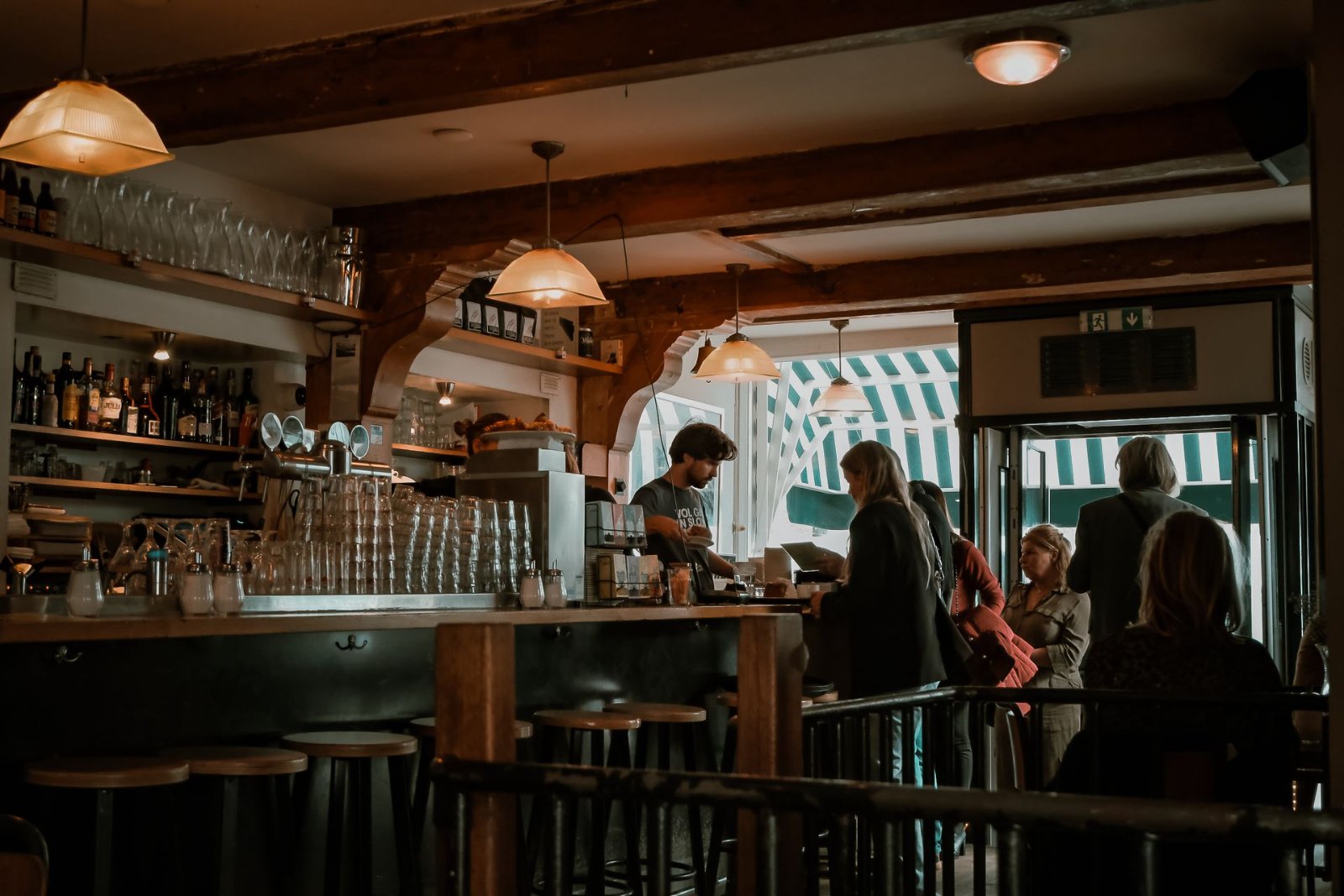
If you’ve ever wondered why a bar crawl through downtown Indianapolis feels so much more exhilarating than a regular night out at a single venue, you’re not imagining things. There’s actual science behind that buzz — and we’re not just talking about the drinks. The human brain is wired in fascinating ways that make moving, exploring, and discovering new environments an incredibly powerful trigger for dopamine release. Understanding the neuroscience behind bar crawls can help explain why events like those organized by Barcrawlerz in Indianapolis consistently leave participants feeling more energized, more connected, and more satisfied than a standard night at a stationary bar.
In this article, we’re going to break down the brain science, explore what makes bar crawls uniquely stimulating, and tie it all back to why Indianapolis has become such a fantastic city for this kind of social adventure. Whether you’re a neuroscience nerd, a social butterfly, or just someone looking for a good excuse to hit the town, this one’s for you.
Understanding Dopamine: The Brain’s Reward Chemical
Before we dive into bar crawls specifically, let’s talk about dopamine. Most people have heard of it — it’s often called the “feel-good” chemical — but the reality is a bit more nuanced and a lot more interesting than that simple label suggests.
Dopamine is a neurotransmitter, meaning it’s a chemical messenger that transmits signals between neurons in your brain. It plays a central role in the brain’s reward system, influencing motivation, pleasure, learning, and reinforcement behaviors. Contrary to popular belief, dopamine isn’t just released when you experience something pleasurable — it’s actually most powerfully triggered by the anticipation of a reward.
“Dopamine is not about pleasure itself — it’s about the pursuit of pleasure. It’s the chemical of wanting, not just having.” — Neuroscientist Robert Sapolsky
This distinction is critical when we start analyzing why bar crawls are so neurologically compelling. The anticipation of what’s around the corner — the next bar, the next drink, the next group of people — is doing a tremendous amount of heavy lifting in terms of dopamine release.
The Role of the Mesolimbic Pathway
The primary dopamine pathway involved in social rewards is called the mesolimbic pathway, sometimes referred to as the brain’s “reward circuit.” This pathway runs from the ventral tegmental area (VTA) deep in the brain to the nucleus accumbens, and it’s deeply involved in processing rewards, reinforcing behaviors, and motivating future actions.
When you do something that your brain perceives as rewarding — whether that’s eating a great meal, achieving a goal, or discovering a cool new bar on Massachusetts Avenue in Indianapolis — this pathway lights up. Dopamine floods the nucleus accumbens, creating feelings of pleasure and reinforcing the behavior that triggered it. In simple terms: your brain is telling you to do that again.
Novelty and the Dopaminergic System
One of the most powerful triggers for dopamine release is novelty — encountering something new, unexpected, or surprising. Research published in journals like Neuron and Nature Neuroscience has consistently shown that novel stimuli activate the dopaminergic system more powerfully than familiar ones.
This is where bar crawls have an enormous neurological advantage over stationary social events. Every new venue you enter during a bar crawl represents a novel stimulus: new lighting, new music, new smells, new people, new drink menus. Each transition is essentially a mini dopamine spike for your brain.
Why Movement Itself Amplifies the Dopamine Effect
Here’s something that might surprise you: the act of physically moving from one place to another is itself a dopamine trigger. Exercise and physical movement are well-documented stimulators of dopamine production. Even the moderate walking involved in a bar crawl — say, moving between stops along the Indianapolis Cultural Trail or hopping from Fountain Square to Mass Ave — contributes to elevated dopamine levels.
This isn’t just a minor effect. Studies have shown that moderate physical activity can increase dopamine synthesis and release, prime dopamine receptors for greater sensitivity, and reduce the breakdown of dopamine in the brain. In other words, the walking between bars isn’t just getting you from point A to point B — it’s priming your brain to feel more reward from each subsequent stop.
The Anticipatory Locomotion Effect
Neuroscientists have identified a fascinating phenomenon called anticipatory locomotion — the tendency for animals (including humans) to become physically active in anticipation of a reward. If you’ve ever noticed that you walk a little faster when you’re approaching a bar or restaurant you’re excited about, you’ve experienced this firsthand.
During a bar crawl, this effect is compounded repeatedly. Each time you leave one venue and head to the next, your brain enters a state of anticipatory excitement. Dopamine begins rising even before you arrive at the next destination. By the time you walk through the door, your brain is already primed for maximum reward response.
How This Compares to Stationary Social Events
At a stationary social event — a house party, a single-venue bar night, or even a corporate happy hour — the novelty factor diminishes rapidly after the initial arrival. Your brain processes the new environment within the first 15 to 30 minutes, and after that, the dopaminergic response begins to level off. You’re no longer exploring; you’re simply existing in a known space.
This doesn’t mean stationary events aren’t enjoyable — they absolutely can be. But neurologically, they lack the sustained novelty loop that keeps dopamine levels elevated throughout the evening. Bar crawls, by design, reset this loop every time you move to a new location.
Social Bonding, Oxytocin, and the Neurochemical Cocktail of Bar Crawls
Dopamine doesn’t work in isolation. During a bar crawl, it’s part of a broader neurochemical cocktail that includes oxytocin, serotonin, and endorphins — all of which contribute to the overall experience of social joy and connection.
Oxytocin: The Bonding Hormone
Oxytocin, often called the “bonding hormone” or “love hormone,” is released during positive social interactions. Shared experiences — especially novel, exciting ones — are particularly powerful triggers for oxytocin release. When you navigate an unfamiliar part of Indianapolis with a group of friends, make collective decisions about where to go next, and share the excitement of discovering a new favorite cocktail bar together, your brain is releasing oxytocin in abundance.
This is why bar crawls have such a remarkable ability to forge new friendships and deepen existing ones. The combination of shared novelty, physical movement, and collective decision-making creates an oxytocin-rich environment that stationary events simply can’t replicate to the same degree.
Serotonin and Social Status Dynamics
Serotonin is another neurotransmitter that plays a role in social dynamics, particularly around feelings of confidence, belonging, and social status. Being part of a group that’s actively doing something fun and adventurous — rather than standing around at a static event — triggers serotonin release associated with positive social identity.
There’s also a subtle but real psychological effect that comes from being “the group that’s out on a bar crawl.” It creates a sense of shared identity and purpose that elevates the entire experience. Groups organized through services like Barcrawlerz in Indianapolis tap into this dynamic beautifully, creating a structured social adventure that gives participants a clear shared identity and goal.
Endorphins and the Laughter Effect
Endorphins are released during physical activity and laughter. Bar crawls tend to generate both in abundance. The walking, the playful banter between stops, the funny moments that inevitably occur when you’re exploring new environments with friends — all of these trigger endorphin release, adding another layer to the neurochemical richness of the experience.
The Neuroscience of Exploration: Why Your Brain Loves Discovering New Places
Humans are fundamentally exploratory creatures. Our brains evolved in environments where exploration was essential for survival — finding new food sources, discovering safe shelters, mapping unfamiliar territories. The neural systems that supported this exploratory behavior are deeply wired into our reward circuitry.
When you explore a new neighborhood or discover a hidden gem of a bar during a crawl through Indianapolis, you’re activating these ancient neural systems. The hippocampus — your brain’s navigation and memory center — is highly active during exploration, and it has strong connections to the dopaminergic reward system. Essentially, your brain rewards you for exploring because, evolutionarily speaking, exploration was a survival skill.
Cognitive Mapping and the Pleasure of Spatial Discovery
As you move through Indianapolis during a bar crawl, your hippocampus is actively building what neuroscientists call a “cognitive map” — a mental representation of the spatial environment you’re navigating. This process of cognitive mapping is intrinsically rewarding for the brain.
This is part of why people often feel a deep sense of satisfaction after a bar crawl, even beyond the social and sensory pleasures involved. They’ve literally expanded their mental map of their city. They know their neighborhood a little better. They’ve discovered streets, venues, and corners of Indianapolis they might never have explored otherwise.
Indianapolis as an Ideal Bar Crawl City
Indianapolis is particularly well-suited to this kind of exploratory social experience. The city’s vibrant neighborhoods — from the eclectic energy of Fountain Square to the upscale sophistication of Broad Ripple, the artsy character of Mass Ave to the lively atmosphere of the Bottleworks District — offer rich, varied environments that make each bar crawl stop feel genuinely distinct.
The relatively compact, walkable nature of many Indianapolis entertainment districts means that bar crawl participants get the full benefit of the anticipatory locomotion effect without excessive fatigue. It’s the sweet spot: enough walking to prime the dopamine system, but not so much that it becomes exhausting.
Variable Reward Schedules: The Most Powerful Dopamine Trigger of All
If you want to understand why bar crawls are so neurologically compelling, you need to understand the concept of variable reward schedules. This is one of the most powerful concepts in behavioral neuroscience, and it’s central to why bar crawls generate such sustained excitement.
A variable reward schedule is one where rewards are delivered unpredictably — sometimes you get a big reward, sometimes a small one, sometimes none at all. Research by B.F. Skinner and subsequent neuroscientific work has demonstrated that variable reward schedules generate the highest levels of dopamine and the most persistent behavioral engagement. It’s the same principle that makes slot machines so compelling.
How Bar Crawls Create Natural Variable Reward Schedules
Every stop on a bar crawl is essentially a spin of the wheel. Will this bar have an amazing atmosphere? Will the bartender make an incredible cocktail you’ve never tasted before? Will you meet someone fascinating? Will the music be perfect? Sometimes the answer is a resounding yes — and those peak moments generate massive dopamine spikes. Sometimes a stop is just okay. But the unpredictability keeps your brain in a state of heightened anticipatory engagement throughout the entire evening.
This is fundamentally different from a stationary social event, where the environment is fixed and the reward schedule is relatively predictable. Once you’ve been at a party for an hour, you have a pretty good sense of what the rest of the evening will look like. Bar crawls maintain genuine uncertainty — and therefore genuine excitement — right up until the last stop.
“The brain doesn’t just respond to rewards — it responds most powerfully to the possibility of rewards. Uncertainty is the engine of dopamine.” — Dr. Wolfram Schultz, Neuroscientist, University of Cambridge
The Role of Barcrawlerz in Optimizing the Variable Reward Experience
This is where a well-organized bar crawl service like Barcrawlerz in Indianapolis adds genuine neurological value. By curating a selection of diverse, high-quality venues across the city, they maximize the range of potential rewards at each stop. You might end up at a craft cocktail bar with an exceptional mixologist, then a lively sports bar with an electric atmosphere, then an intimate speakeasy-style lounge — each one a genuinely distinct experience.
The curation also ensures that the overall quality floor is high enough that even the “smaller” reward stops are still genuinely enjoyable, which maintains dopamine engagement without the frustration of a truly disappointing experience. It’s expert-level variable reward schedule management, even if the people doing it might not describe it in those terms.
Social Facilitation and Group Dynamics in Bar Crawl Settings
The neuroscience of bar crawls isn’t just about individual brain chemistry — it’s also about how group dynamics amplify neurochemical responses. Social facilitation, a well-documented psychological phenomenon, describes how the presence of others enhances individual performance and arousal.
In a bar crawl context, this means that the excitement of the group becomes contagious. When your friend reacts with delight to a new venue, your mirror neurons fire in response, generating a vicarious dopamine response. When the group collectively decides to try an adventurous new cocktail, the shared anticipation amplifies everyone’s individual dopamine response.
The Optimal Group Size for Maximum Dopamine Effect
Research on social group dynamics suggests that there’s an optimal group size for social enjoyment — large enough to create genuine social energy and the possibility of diverse interactions, but small enough to maintain cohesion and avoid the anonymity that comes with very large crowds.
Most neuroscientists and social psychologists would suggest this sweet spot is somewhere between 8 and 20 people for an activity like a bar crawl. Large organized crawls, like those run by Barcrawlerz in Indianapolis, often structure their events to maintain this kind of social architecture even when total participant numbers are larger — creating smaller group dynamics within a larger social event.
Memory Formation and the Lasting Neurological Impact of Bar Crawls
One of the most remarkable aspects of the bar crawl experience from a neuroscientific perspective is how effectively it creates lasting memories. The combination of novelty, emotion, physical movement, and social connection creates ideal conditions for memory consolidation in the hippocampus.
Memories formed during emotionally and neurochemically rich experiences are encoded more deeply and retained more vividly than memories from routine, low-stimulation events. This is why people can remember specific moments from a memorable bar crawl years later, while entire evenings at a familiar bar might blur together in memory.
The Peak-End Rule and Bar Crawl Memory
Psychologist Daniel Kahneman’s research on the “peak-end rule” is particularly relevant here. His research shows that our memories of experiences are disproportionately shaped by the peak moment (the most intense point, positive or negative) and the ending. Bar crawls, with their variable reward structure, naturally tend to create strong peak moments — and a well-designed crawl that ends on a high note (a great final venue, a memorable group moment) will be remembered as an exceptionally positive experience even if some middle stops were merely okay.
This is another area where professional bar crawl organizers like Barcrawlerz in Indianapolis demonstrate their value. Thoughtful route planning that builds toward a memorable final destination isn’t just good event planning — it’s neurologically optimal experience design.
The Indianapolis Bar Crawl Scene: A City Built for Dopamine
Indianapolis has undergone a remarkable transformation over the past decade. Once somewhat overlooked as a nightlife destination, the city has developed a genuinely vibrant and diverse bar and restaurant scene that makes it an ideal city for bar crawl experiences.
The Mass Ave Cultural District offers an eclectic mix of craft cocktail bars, gastropubs, and intimate music venues. Fountain Square brings a quirky, artistic energy with its vintage bowling alleys and neighborhood dive bars. The Bottleworks District has introduced a new level of sophistication with its stunning adaptive reuse architecture and carefully curated food and drink offerings. Broad Ripple remains a perennial favorite for its lively, youthful energy and density of entertainment options.
Each of these neighborhoods has a distinct character, which means that a well-planned bar crawl through Indianapolis can expose participants to genuinely varied environments within a single evening — maximizing the novelty effect and keeping the dopamine system engaged throughout the night.
Seasonal Bar Crawls and the Indianapolis Calendar
Indianapolis also benefits from a strong culture of themed and seasonal events that give bar crawls additional layers of novelty and excitement. Holiday crawls, sports-themed crawls around Colts or Pacers game days, summer crawls that take advantage of the city’s outdoor patios and rooftop bars — each of these adds thematic coherence and additional novelty triggers to the core bar crawl experience.
Barcrawlerz has been particularly active in leveraging Indianapolis’s event calendar to create crawls that feel timely and relevant, adding the neurological bonus of cultural participation — the sense of being part of something bigger than just a night out.
Practical Takeaways: How to Maximize Your Bar Crawl Dopamine Experience
Understanding the neuroscience is fascinating, but let’s make it actionable. Here are some evidence-based tips for getting the maximum neurological benefit from your next bar crawl in Indianapolis.
Embrace the Unknown
Resist the urge to over-research every stop in advance. The uncertainty is part of what makes the experience neurologically powerful. Let yourself be surprised. If you know exactly what every bar looks like, what the menu is, and what the vibe will be before you arrive, you’ve reduced the novelty factor and blunted the anticipatory dopamine response.
Stay Present Between Stops
The walking between venues is neurologically important, not just logistically necessary. Pay attention to your surroundings. Notice the architecture, the street art, the sounds of the city. This active engagement with the environment enhances the cognitive mapping process and deepens the overall neurological richness of the experience.
Mix Up Your Social Interactions
Make an effort to talk to new people at each stop — both within your group and with other patrons. New social interactions are themselves novelty stimuli that trigger dopamine release. The social richness of a bar crawl is one of its most neurologically valuable features, so lean into it.
Try Something New at Each Stop
Order something you’ve never had before at each venue. The act of trying a new drink — the anticipation, the first sip, the evaluation — is a complete mini-reward cycle that generates its own dopamine response. It also creates distinct sensory memories associated with each stop, enriching the overall memory of the evening.
Choose Your Crawl Wisely
Not all bar crawls are created equal. A well-organized crawl with thoughtfully selected venues, good route planning, and a lively group of participants will deliver a significantly richer neurological experience than a hastily thrown-together night out. This is where services like Barcrawlerz in Indianapolis genuinely earn their reputation — by doing the planning work that optimizes the experience for maximum enjoyment.
Final Thoughts: Your Brain Was Made for This
There’s something deeply satisfying about understanding why something feels so good. Bar crawls aren’t just fun — they’re neurologically sophisticated social experiences that engage multiple reward systems simultaneously, sustain dopamine elevation through repeated novelty, leverage the power of variable reward schedules, and create the ideal conditions for both social bonding and lasting memory formation.
Indianapolis, with its walkable entertainment districts, diverse bar scene, and vibrant social culture, is one of the best cities in the Midwest to experience all of this firsthand. And with organizers like Barcrawlerz doing the heavy lifting of route planning and venue curation, the barrier to experiencing a truly exceptional bar crawl has never been lower.
So the next time someone asks you why you love bar crawls more than regular nights out, you can tell them it’s not just a preference — it’s neuroscience. Your brain is literally wired to find moving, exploring, and discovering new places with great people more rewarding than standing still. Honor that wiring. Get out there. Explore your city. Let your dopamine do its thing.
And if you’re in Indianapolis and looking for your next great social adventure, Barcrawlerz is ready to take you on a neurologically optimized tour of one of the Midwest’s most exciting nightlife scenes. Your brain will thank you.